Blog

Alyda Twilley Alyda Twilley

ELI Post Trip Reflection

“Travel isn’t always pretty. It isn’t always comfortable. Sometimes it hurts, it even breaks your heart. But that’s okay. The journey changes you; it should change you. It leaves marks on your memory, on your consciousness, on your heart, and on your body. You take something with you. Hopefully, you leave something good behind.” – Anthony Bourdain

“Travel isn’t always pretty. It isn’t always comfortable. Sometimes it hurts, it even breaks your heart. But that’s okay. The journey changes you; it should change you. It leaves marks on your memory, on your consciousness, on your heart, and on your body. You take something with you. Hopefully, you leave something good behind.” – Anthony Bourdain

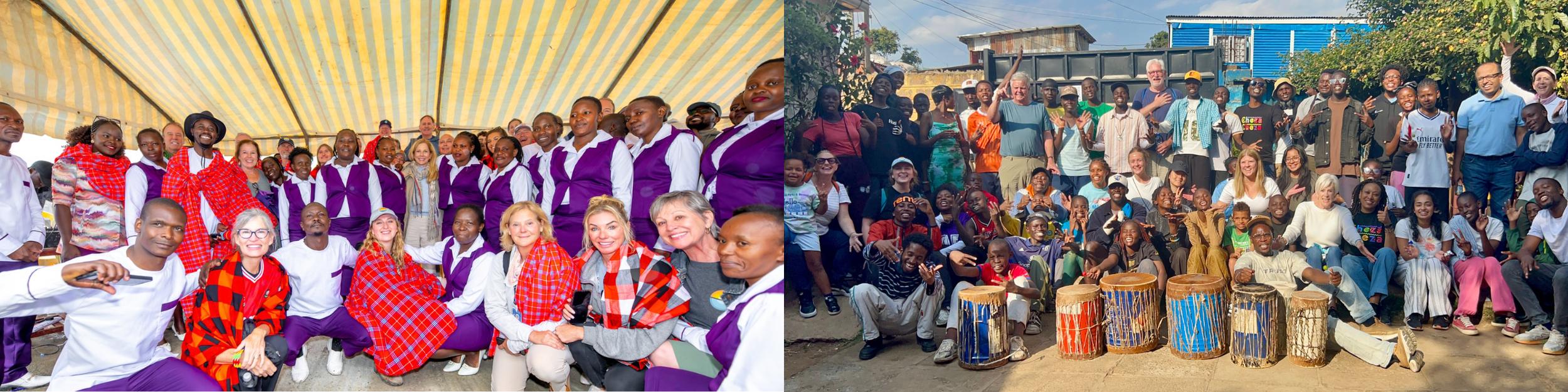
The 2025 ELI Service Trip to Kibera, Kenya was often uncomfortable.  It was so much more than a project.  It was a transformational experience that redefined cross-cultural immersion and united young leaders in purpose, growth, and connection. Over the course of the trip, our participants from the United States and Europe built an urban garden shoulder to shoulder with local participants (from Cheza Cheza and City Shamba). 

It would be shortsighted to underestimate the value of the urban garden.  It has already strengthened  Crossing Thresholds’ feeding program(s). Yet the power of lasting relationships that transcend borders is the greatest gift.  As Mark Twain once wrote, “Travel is the death of prejudice, bigotry and narrow-mindedness.” Listen to some of the reflections from our trip participants about the power of shared service, cultural exchange, and what it means to lead with heart. Here’s what they had to say about the experience:

“What an experience! What I got to learn was: the value of common purpose, fresh perspectives, and mutual trust. I enjoyed interacting with all the members, celebrating a wide range of skill sets, and allowing for both our differences and similarities. I left feeling motivated, grateful, and ready to carry these teachings forward. See you soon!”

  • Alexander

“Here is what I have learned about myself from working with this team. Internal growth happens when you can acknowledge the love surrounding you. Acceptance is difficult.  Grace and beauty can absolutely coexist with difficulty.”

  • Julia

“I just want to say a big THANK YOU to everyone.!  It was such a pleasure working together. Our dedication, teamwork, and positive spirit made all the difference. I truly appreciate the collaboration and I learned a lot along the way.”

  • Mildred

“I learned that I love connecting with new (all) people and validating their experiences through sharing the beauty & strengths I see in them. It's a blessing to build trust and to have the capacity to hold space for so many perspectives as well as all of our similarities.”

  • Ryanna

“Working with this team has taught me the power of collaboration and how much stronger we become when we support each other's strengths. I've learned I can handle tough situations.  I have also learned that I can be creative and come up with new ideas better than I ever thought I could!”

  • Jennie

“Working with this team has taught me the value of embracing new experiences, learning from others’ perspectives, and appreciating the strengths they bring. I also discovered that true connection and empowerment come from a shared purpose and working alongside one another.”

  • Nicole

As Bourdain has written, the journey left marks on our memories, our consciousness and our hearts.  May those marks continue to make a difference in the world we so dearly love.
- ELI 2025 Trip Participants

Read More
Alyda Twilley Alyda Twilley

Dreams Becoming Reality - Reflecting on the Inaugural ELI Trip

In April, my dear friend and ELI co-chair, Ashley Hart, wrote a beautiful blog about turning childhood dreams into realities and what it means to become individuals capable of creating a lasting impact. If you have not read her blog, I encourage you to read hers first because this blog is about the embodiment of that vision.

In April, my dear friend and ELI co-chair, Ashley Hart, wrote a beautiful blog about turning childhood dreams into realities and what it means to become individuals capable of creating a lasting impact. If you have not read her blog, I encourage you to read hers first because this blog is about the embodiment of that vision. 

This July, The Emerging Leaders Initiative embarked on our first trip to Kenya with a full team of young professionals ages 18 to 39. To give some context, ELI was founded under the principle that an organization dedicated to empowering the futures of tomorrow MUST include young people at the table. That is where ELI comes in – to expand our reach, express our concerns, achieve our goals, create impact, and make sure there is always a pathway for young voices to be heard. So, that is our mission. 

At our core, Crossing Thresholds is about connection and community building.  We believe in collaboration – building one team, one community, all of us rising together. On this summer’s trip, we took this philosophy and ran with it, creating the first-ever team that was not only American volunteers but also Kenyan volunteers. In other words, we had young people from Crossing Thresholds combined with young people from two partner organizations: Cheza Cheza, and City Shamba “City Garden”. Together, we built and launched an urban garden to supplement the feeding programs at CT’s schools. We did it!  But just as important as the garden, we built a community.

We started with a simple question: how do we build meaningful and lasting relationships in just a week? Because while our goal was to build the garden, our secondary goal was to leave Kenya with a team that felt deeply connected, united by our shared purpose.  Each morning in an effort to encourage this process, we would dance together, playing fun games that pulled us out of our self-consciousness and into the collective experience. Dance drew us into the present moment as we laughed and cried and held each other. 
 
As we let go of self-consciousness, we opened ourselves to the power of empathy and vulnerability. Each day, we offered a new question to the group; and each day, we eagerly awaited the answers of our fellow team members. Bouncing between questions that embraced positivity and questions that challenged us, we created a room of nonjudgement and peace. In our space as a team, we were safe and spoke freely. The true value of creating this kind of space cannot be understated. It became apparent that we shared the same passion for life and the same fears. We wanted similar things for our futures and our families, and we shared the same frustrations in the face of a hostile, divided and ever-changing world. As politically fueled protests filled every city in the US, young Kenyans were pouring into the streets of Nairobi. And so, we talked about why we all felt so unheard and under-represented. We talked about what we wanted from this world and for our futures. 

To give you a sense of the depth of our shared process, I will share some of the questions we asked: 

  1. What does it mean to be a human being? A global citizen? 

  2. What is your greatest source of fear or stress? 

  3. What is justice?  What does it look like in your setting? 

  4. Where can you see yourself becoming an agent of change? 

Lastly, we asked everyone to share what they learned about themselves after working on the ELI team. The responses were amazing and will be shared in our next newsletter!

I am beyond grateful to be a part of experiences like this one.  They remind us of what it means to build a meaningful life. Without question, young people are worried and often disheartened.  At the same time, we are hopeful. If we continue to pull together instead of choosing disconnection, we can achieve incredible things. This is what ELI was created to do. We are a reminder of the potential each new generation holds. This was our first trip. We are just getting started. We hope you join us on the journey.  Thank you for believing in us.

- Rebecca Schneider Co-Chair of ELI

Read More
Alyda Twilley Alyda Twilley

From Strangers to Heart Family: My Journey With CT By Ryanna Cook, Mrs. Washington America 2025

Before I ever marveled at the beauty of the Kenyan landscapes or held the hand of a child in Kibera, I was a young twenty-something from Washington state who understood poverty from the inside out– at least, in America.
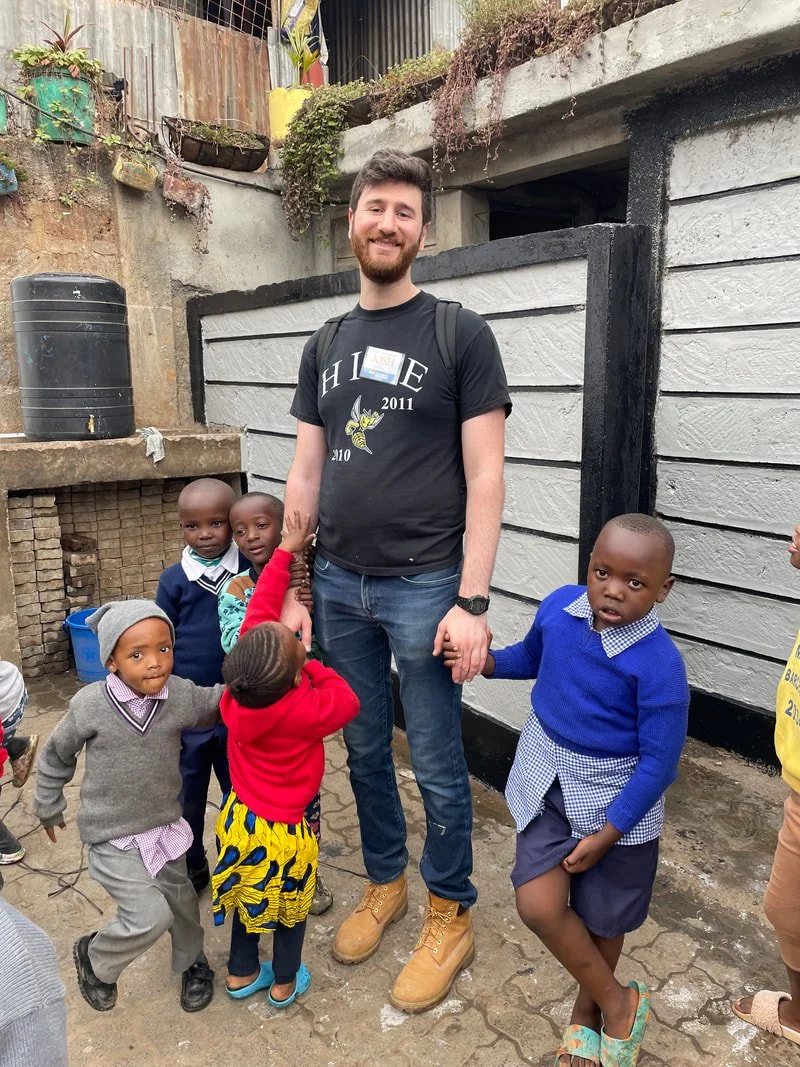
Before I ever marveled at the beauty of the Kenyan landscapes or held the hand of a child in Kibera, I was a young twenty-something from Washington state who understood poverty from the inside out– at least, in America.

I grew up moving 1-2 times per year, living in, at best, unkept subsidized apartments - and at worst with my three sisters in a dark, single-window basement tucked within an alleyway. Our single mother had started her adult journey as a drop-out teen mom with burned bridges - each of us girls having different fathers who were either too unsafe to be around or who just didn’t want to be around. Our household survived on tax-funded resources - food stamps, free lunch programs, and community donations. We shared everything. But it often wasn’t enough, and we endured the abuse and neglect that often accompany poverty.

Those years left a mark, but they also planted a seed. Because even in those hardest moments, as we felt the cold sting of shame – a few people chose to place themselves within our reach, offering stability, resources, and love. People who became family to me, whether related or not – my heart family. They showed me that I could lead others in love one day. Their belief in me built belief in myself, and I became the first in my family to graduate from high school and to attend and graduate from college. I broke cycles of poverty and abuse– having married my dream partner, building successful businesses, saving our niece from those same cycles and adopting her, and building our dream home, and - just this year -  earned the title of Mrs. Washington America. All because others showed up for me.

The heart of my story didn’t fully awaken my sense of purpose until 2014, when I took a leap of faith and joined a group of strangers traveling to Kenya with Crossing Thresholds. I wanted to positively impact a community, but hardly had a sense of what I was walking into - in fact, I had only just learned of CT via an acquaintance who heard Carter Via speak on NPR while she was working in California! I took my first trans-Atlantic flight with my husband’s full support, and met CT organizers and participants for the first time, in Kenya!

During that first trip, I learned lessons of the heart that I carry with me to this day. From Carter’s own words: real change happens when we meet people where they are. Not where we expect them to be. Not where it’s most comfortable. That’s where dignity lives. That’s where partnership begins. And that’s where sustainable, soul-deep transformation takes root. It’s through that transformation that we forge deep human connections, whether with locals or trip participants. This connection cultivated the expansion of a space I curated, protected, and until then, kept small: my heart family. I was validated. I was liberated. I came home ready to solve problems, yearning to give more. 

And that was the point. We NEED to connect communities at a familial level to ignite a broad outreach, to inspire others to WANT to serve and mentor. It’s in disconnection that we leave those who need us, behind.

And it was this unusual outcome that inspired my husband to attend his first trip the following year - the yearning to learn and teach, to touch and be touched.

Since my first trip, my husband and I have made a combined eight visits to Kibera and two Mount Kilimanjaro fund-raising trips. Later this month, I’ll board a plane for my fifth personal trip, and my heart is already there – ready to embrace my heart family, and expand it.

I’ve helped organize the FAFU thrift store, guest-taught art, math, and science, funded an entire school’s textbooks, filled libraries, helped construct Mobjap School and its protective firewall– even placing my father figure’s ashes in the mortar. I’ve conducted home surveys to understand what families truly need and spent hours mentoring children across our schools, listening to their dreams, comforting their hurts, and celebrating their wins.

It’s messy. It’s emotional. It’s incredibly human. But more than anything, it’s love in action. CT is not only an extension of my heart family, but it’s where others find theirs. We dance together. We cry together. We learn from one another in ways no textbook could ever teach. This work isn’t just changing lives in Kibera. It’s changing us. It changes how we see the world, how we parent, how we lead, and how we love.

As Mrs. Washington America, I speak often about my platform: Breaking Cycles: Tools for Our Vulnerable Youth. From my life experience through my over 10 years with CT, I KNOW that breaking cycles anywhere helps break cycles everywhere. I know it, because I lived it– I AM what happens when we invest in the lives of children. In Kibera - your mentorship, presence, and love can empower the youth to become beacons of hope.

That’s why I keep returning. That’s why I’m writing this.

To invite you to take the leap I once did. To join us - whether with your boots on the ground in Kenya or by sponsoring a student or project from wherever you are. You don’t need to have all the answers. You don’t need to speak Swahili. You just need to show up with an open heart, ready to learn - and expecting to get a little dirty.

I hope I’ll see you in Kibera.

By Ryanna Cook, Mrs. Washington America 2025

Read More
Alyda Twilley Alyda Twilley

New Leadership for ELI by Josh Pedowitz

In 2020, I found myself spending a lot of time thinking about two questions: 1) How could I get involved with Crossing Thresholds as a volunteer beyond trip participation? 2) What could I do to help quell the extraordinary pain that COVID-19 was causing in our communities in Kibera? Not only did it turn out that Becca Schneider was asking herself the same questions, but also that the answer to those questions fundamentally aligned with a vision that Carter and Faith had for bringing young minds into Crossing Thresholds. Together, we saw a unique opportunity: creating CT’s Emerging Leaders Initiative (ELI) - a way to bring fresh ideas and energetic young people into Crossing Thresholds to create the future of CT’s leadership and drive meaningful, lasting impact. I’m so happy to share that the dream we had for ELI has become a reality.

In 2020, I found myself spending a lot of time thinking about two questions: 1) How could I get involved with Crossing Thresholds as a volunteer beyond trip participation? 2) What could I do to help quell the extraordinary pain that COVID-19 was causing in our communities in Kibera? Not only did it turn out that Becca Schneider was asking herself the same questions, but also that the answer to those questions fundamentally aligned with a vision that Carter and Faith had for bringing young minds into Crossing Thresholds. Together, we saw a unique opportunity: creating CT’s Emerging Leaders Initiative (ELI) - a way to bring fresh ideas and energetic young people into Crossing Thresholds to create the future of CT’s leadership and drive meaningful, lasting impact. I’m so happy to share that the dream we had for ELI has become a reality. 

After five amazing years as co-chair of ELI, I’ve decided to step down from the position. As part of the process of making that transition, I wanted to share a bit about the journey that we’ve gone through and the way we’ve grown. I also wanted to take the opportunity to reflect on the ways that I’ve grown as part of ELI. And finally, I wanted to write this blog for anyone who is asking themselves how they can get further involved, like I was. If that sounds like you, reach out and let’s chat!

It’s almost hard to believe that we launched that first fundraiser 5 years ago. Looking back, the success of that fundraiser gave us a jump start that proved there was something to the vision we all shared. The fundraiser brought in an incredible $40,000 for our medical budget. That moment wasn’t just about raising funds; it was about realizing that when we come together, we can truly make a difference. It was also a far more significant fundraising project than I'd ever been a part of, and that came with several learnings. Fundraising can feel uncomfortable at first, but I quickly learned that the worst someone could say is no. It’s easy to imagine in your mind that others won’t feel as strongly as you do about a cause, but when you show your passion and your willingness to step up, people are surprisingly generous. 

From there, our responsibilities grew along with our team. We expanded into managing CT’s communications and website, rethinking how Crossing Thresholds connects with its community. We also began getting involved with CT events, helping organize and set up the annual gala. More recently, our projects have taken on an even more exciting dimension as we’ve begun hosting ELI-specific events and programming. For some time, Becca and I had discussed different directions in which ELI could grow. In retrospect, going back to the “roots” of ELI with project-based work should have been obvious. Last year, we hosted our very first cultivation event designed to welcome more young people into the Crossing Thresholds family. Hosting an event on our own was honestly nerve wracking, but it showed us that ELI needed to both create its own space and integrate with the rest of CT in order to reach its potential. This year, we’re building on that momentum with our first-ever ELI trip to Kibera in the summer! If you’re interested, please reach out! Along with the trip, we’ve crafted an experience that caters to young, new trip participants by hosting a fundraiser where we will connect past trip participants with new faces eager to learn and contribute. Join us on May 31st in NYC for this exciting event! 

Thinking back, I’m beyond grateful for the trust that Carter, Faith, and the rest of CT’s board and staff have had in us over the past few years. It was that trust and open-mindedness that allowed us to try new things and have a seat at the table in the organization. As I step down from my role as co-chair, I feel so much pride for what we’ve accomplished and an immense amount of anticipation for what lies ahead. And I’m glad that I’ll continue to see and contribute to ELI’s future in a non-leadership capacity. I'm even more excited to welcome Ashley Hart into ELI leadership, joining Becca as the new co-chair. Finally, as I mentioned above, if you’re a young person with a passion for making a difference, reach out to us and get involved! If we’ve proven anything over the last five years, it’s that your ideas, energy, and commitment are precisely what we need to keep moving forward at Crossing Thresholds.

- Josh Pedowitz Co-Chair of ELI from 2020 to 2025

Read More
Alyda Twilley Alyda Twilley

Living into Childhood Dreams - Ashley Hart

In 2014, Becca Schneider and I stepped onto a plane for my first trip to Kibera. It was during this trip that our conversations drifted to discussing the accessibility of non-profit work and our desire to find ways to let more people share in these experiences. By the end of our trip, a pact was made that we would one day co-chair a board of a non-profit together to bring our visions to life. This pact was memorialized by a calendar reminder set to go off in 2024. When this reminder went off eleven years later, we were ready to make good on our promise to each other and to Crossing Thresholds (CT). Now we are co-chairs of the Emerging Leaders Initiative (ELI), and we are preparing to run our very first ELI trip together. As we take these next steps, I wanted to reflect on how I got here and what this journey means to me.

In 2014, Becca Schneider and I stepped onto a plane for my first trip to Kibera. It was during this trip that our conversations drifted to discussing the accessibility of non-profit work and our desire to find ways to let more people share in these experiences. By the end of our trip, a pact was made that we would one day co-chair a board of a non-profit together to bring our visions to life. This pact was memorialized by a calendar reminder set to go off in 2024. When this reminder went off eleven years later, we were ready to make good on our promise to each other and to Crossing Thresholds (CT). Now we are co-chairs of the Emerging Leaders Initiative (ELI), and we are preparing to run our very first ELI trip together. As we take these next steps, I wanted to reflect on how I got here and what this journey means to me.  

ELI did not start with me, it began as a commitment from the senior leadership at CT  - a way to bring fresh ideas and energetic young people to the forefront of the organization to create the future of CT’s leadership and drive meaningful, lasting impact. The original team of Josh Pedowitz and Becca Schneider brought the incredible vision of ELI to life, and I am excited to step into this role alongside Becca to continue to expand the reach of Crossing Thresholds and ELI. Together, we are opening doors for young leaders within our own communities who want to bring their time, effort, and creativity to the Kibera Slum.

My involvement in CT and ELI is not a new component to my life. Ever since my first trip in 2014, CT has remained a constant presence in my life. However, as life got crazy (i.e., college, law school, first jobs, etc.) and my ability to go on an additional trip became strained, I found myself asking: how can I remain involved beyond trip participation? This question was answered when one evening, Becca told me about her and Josh’s engagement with ELI. Over the five years ELI has grown, so has my involvement. First, I was a sounding board for new ideas, and last Spring, my involvement grew to hosting our first-ever Spring event with the ELI Team. At this first event, we focused on cultivating interest and bringing fresh, young, new minds into the CT and ELI family.

The success of ELI’s first event cemented in all of us the knowledge that we were on the right path. For me personally, it validated the idea that started as a conversation between two friends eleven years ago - young people want ways to be involved and make real change. That’s why there are no words to adequately describe the excitement I feel as I step into this role with my closest friend by my side. If there is anything ELI has proven, it is that these fresh ideas, passion, and excitement are a critically important piece of driving CT to the next level. I am excited to bring just that while we continue to grow ELI through increasing accessibility, building connections, and opening doors for the next generations' involvement. 

This first year as co-chair is a pivotal one. We are building off of last year’s success and have launched the first-ever ELI trip to Kibera. This trip has a dual focus:  1) to provide an experience focused on growing connections between our communities, and 2) to build an urban garden to support the feeding programs at CT’s five schools.  On the more practical side, this trip has been designed at a more accessible price point for the younger, 18+, generation who is looking for a more approachable way to get involved. The volume of interest in this trip has been nothing short of exciting. If this trip sounds like something you would like to join, there are a few spots left, and we would love to have you! In addition, we are hosting another Spring fundraiser to support our trip and the creation of the ELI fund.  This event will aim to reunite past trip participants who seek to financially support the mission through donations and intellectually by providing advice and guidance to the new participants. We would love to have you join us on May 31st for this exciting event!

To say I am excited is an understatement because this is a dream fulfilled. Be a part of our shared dream and share in our excitement. Join us on May 31st in NYC, or (if you are a young leader) join our trip!

Sincerely, 
Ashley Hart

Read More
Alyda Twilley Alyda Twilley

Insights from Sean Garvey

My trip to Kenya this winter break was pivotal. Returning for the second time made the experience even more profound. What stood out the most was the absolute primacy of relationships – how important relationships are and what a difference they can make. I can say without reservation, “This trip was filled with some of the greatest hearts I have ever encountered.” We had fun; we spoke openly and deeply, and I found that everywhere I turned, there was someone interesting and genuine with whom I could connect.

My trip to Kenya this winter break was pivotal. Returning for the second time made the experience even more profound. What stood out the most was the absolute primacy of relationships – how important relationships are and what a difference they can make. I can say without reservation, “This trip was filled with some of the greatest hearts I have ever encountered.” We had fun; we spoke openly and deeply, and I found that everywhere I turned, there was someone interesting and genuine with whom I could connect.   

Visiting Kibera, I saw that the relationships built years earlier had lasted, and forming new ones felt even more natural. Starting conversations can be challenging at first, but each person was as interested in me as I was in them. The connections and conversations were definitely the most stimulating and heartwarming aspect of the trip. 

On the trip, building relationships with the teachers, staff, students, and local workers became a priority for everyone.   For me, a highlight was reconnecting with my mentee, Dass, from two and a half years ago.  I was able to reconnect with his parents, visit his high school, and even introduce him to my mother and brother over lunch. This brought such joy to both of us. The last time I saw him, he was in seventh grade at FAFU school, and all I knew was how much he loved soccer. Now, several years later, he’s a prefect at his high school, an incredible drummer, a talented chef, and eager to take on leadership roles. Dass's hard work and big heart ended up mentoring me more than I mentored him. Now, a month later, I am aware of how much this experience has inspired me and filled me with deep and lasting joy.

My second trip to Kenya showed me how important it is for human beings to keep expanding the web of relationships. This kind of expansion promises to keep pulling me back to experiences like this one. The work CT does in Kibera is about far more than just building schools. It’s about building communities focused on a brighter future for every child. These schools are not just concerned about academics but also personal development and leadership, equipping students with the skills to succeed anywhere in the world. 
Being part of the Crossing Thresholds family has been a blessing to me.  The lessons learned promise to stay with me for a lifetime.

- Sean Garvey
Crossing Thresholds Trip Volunteer and Mentor

Read More
Alyda Twilley Alyda Twilley

23 Students from Our High School Program Graduated!

This year was a significant milestone for Crossing Thresholds, as 23 students from our high school program graduated and completed their national exams. These students represent the first major cohort to graduate since we launched our Futures Program, a scholarship program for high school students from the Kibera Slum.
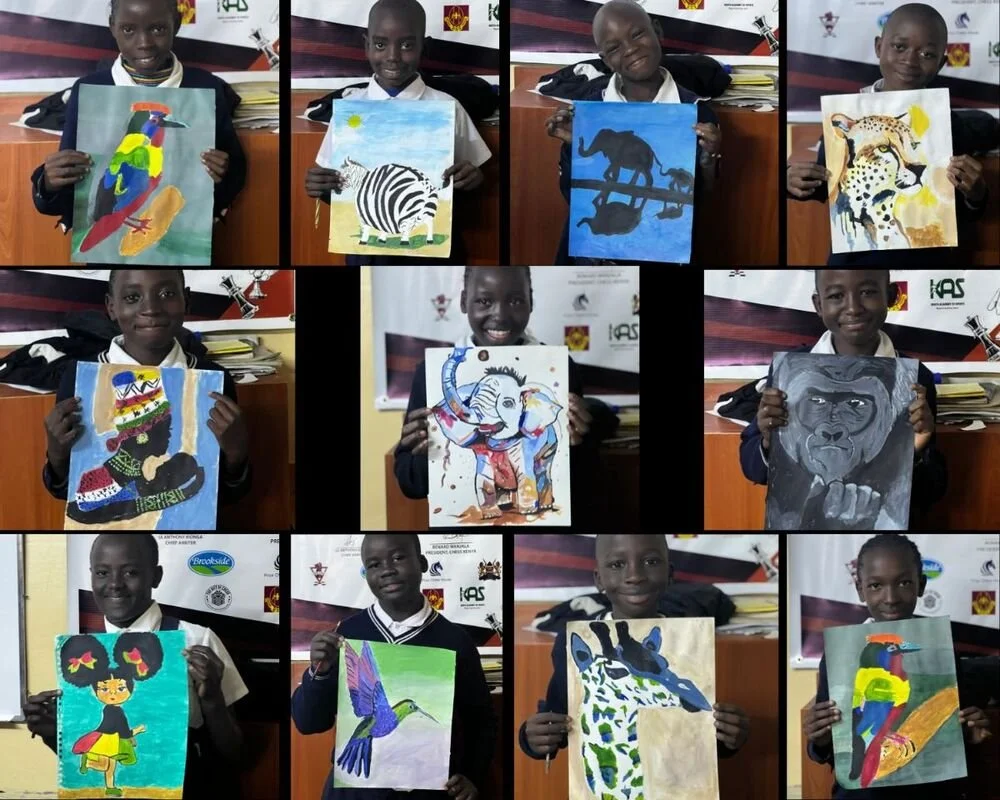
This year was a significant milestone for Crossing Thresholds, as 23 students from our high school program graduated and completed their national exams. These students represent the first major cohort to graduate since we launched our Futures Program, a scholarship program for high school students from the Kibera Slum. 

This achievement highlights the students' hard work and determination and demonstrates the positive impact of our scholarship program, which provides underserved children in Kibera with access to quality education and opportunities.
We are incredibly proud of their accomplishments and look forward to seeing where their educational journeys will take them next.

Here is what some of them had to say:

“Thank you to Crossing Thresholds for supporting my education and ensuring my studies were not interrupted due to lack of school fees. Your involvement in my academic journey means a lot to me, and I am now confident in my dream of becoming a civil engineer. Going forward,  I am hoping that I will get a chance to join the University.  This will allow me to have a positive impact on the lives of others.”

  • Michelle


“I am grateful for the opportunity to attend school with the support of Crossing Thresholds. My high school experience has been smooth, and I had ample time to study because my school fees were paid on time. I am hopeful that I will achieve a good grade and believe I will have another opportunity to further my education at the college level. Thank you, and I pray that through your support, others will also have the chance to go to school.”

  • Kennedy


“My high school experience had some valuable lessons about life. Throughout my journey, I have gained important knowledge, and I am grateful that I had the chance to go to high school. I believe that the education I have received will enable me to achieve significant accomplishments in the future, allowing me to give back to society. I would like to express my gratitude to Crossing Thresholds, and I am optimistic about qualifying for university when the results are released.”

  • Kean


“I want to express my heartfelt gratitude to Crossing Threshold for the support you have provided me throughout my high school journey. I have recently completed my high school education and am eagerly awaiting the results. Over the past four years, I have learned a lot and had the opportunity to interact with students from diverse backgrounds. As a Class Captain at my school, I was able to apply my leadership skills to help our school grow and thrive. Thank you once again for your support, and may the Almighty God bless you abundantly as you continue to assist other children in need.”

  • Dorcas


“Crossing Thresholds has been a great support during my high school journey. Despite the challenges that come with being a student, I have been fortunate NOT to worry about school fees. I am hoping to achieve good test results so I  can attend university and pursue my career. I believe we can all make Crossing Thresholds proud by becoming successful in life.”

  • Bravine


"I appreciate Crossing Thresholds for being supportive and ensuring my high school education was successful. Your dedication to helping me navigate the challenges of education has been helpful in my success. I genuinely appreciate the opportunities you've provided for me to learn, grow, and develop new skills. Thank you for believing in me."

  • Alex


“High school has been a wonderful experience for me since my education was fully funded by Crossing Thresholds. Having been born and raised in Kibera, I have learned a lot and made many new friends from places I never dreamed of visiting. Through my interactions with fellow students, I realized that we are all equal and that our backgrounds do not define who we are. Thank you, Crossing Thresholds, for giving me the opportunity to study. I hope to make you all proud!”

  • Margret


- Recent High School Graduates

Read More
Alyda Twilley Alyda Twilley

Insights from How to Draw a Lion - Art Teacher and the Mobjab Students

During our recent trip to Kenya, we engaged our students in an art program in partnership with "How to Draw a Lion," – an organization committed to teaching children the power of art. These classes were led by Samuel Kinyua, a passionate local artist employed by HTDL. This initiative offered an artistically stimulating experience while raising awareness about child welfare and conservation efforts in sub-Saharan Africa.
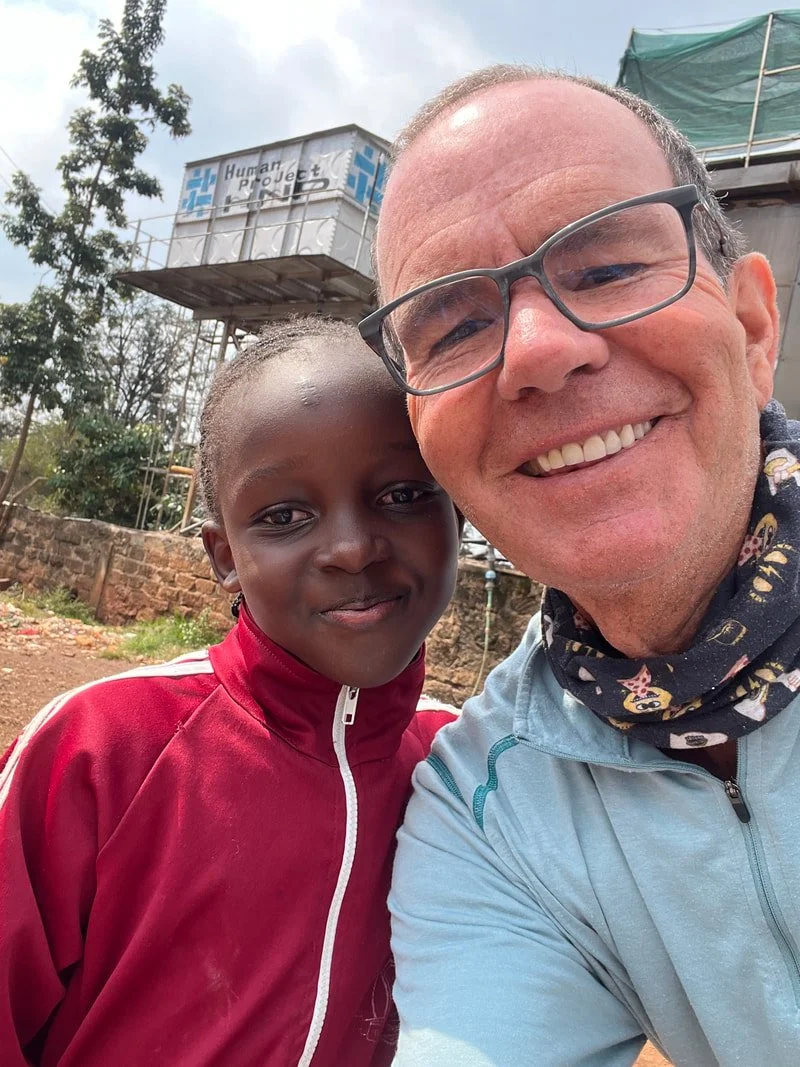
During our recent trip to Kenya, we engaged our students in an art program in partnership with "How to Draw a Lion," – an organization committed to teaching children the power of art. These classes were led by Samuel Kinyua, a passionate local artist employed by HTDL. This initiative offered an artistically stimulating experience while raising awareness about child welfare and conservation efforts in sub-Saharan Africa. Below, hear from Samuel and the students about their experience during this initiative! ​

Hi, my name is Samuel, and I work with How to Draw a Lion. I have been happy with talented kids at Mobjab, and the excitement in their eyes makes me overjoyed! They are always ready to learn how to paint and improve their talents. In my childhood, I didn't get proper art supplies to empower my skills in art, so I'm happy for the How to Draw a Lion art classes where kids get the opportunity to learn while they’re still young. It gives hope to the power of talent in kids. 
I mostly get questions from other artists like "How do you handle it when it comes to teaching kids who didn’t know how to paint before?" And I would just say that kids like doing what they can see, and doing visual explanations makes learning easy. I continue to show interest in the work they’re doing and not to worry about what seems impossible.
Drawing and painting animals is mostly fun since they have different colors.
Working on art with the kids at Mobjab was so astounding because most of the kids would ask what was next, and I would guide them. I like kids who always speak out when they are stuck, hence making classes awesome.
We asked the students to give insights on each of their paintings; here’s what they had to say - 
Trevor Otieno depicted a heartwarming scene of an elephant and its calf in his artwork. His deep admiration for elephants shines through the beautiful sketch, radiating joy and happiness.
Adrian Javan felt a sense of pride as he completed drawing a giraffe. His drawing was inspired by the graceful beauty and unique lifestyle of giraffes.
Michelle Adhiambo enjoyed sketching a portrait of a beautiful African girl, finding joy in capturing the beauty of African heritage through her artwork.
Fabian Kyalo is fascinated by the high-flying and explorative nature of hummingbirds. This fascination inspired him to sketch the hummingbird, and the experience filled him with excitement.
Simeon Wasike expressed his love and admiration for his mother by creating a beautiful drawing of an African mother.
Ravel Ivaronga was fascinated by the speed of a leopard and felt excited to sketch a picture of the animal.
Boniface Uhuru found the Zebra, a beautiful animal, and was excited to create a drawing to capture its beauty.
Peter Anyola is captivated by the unique features of gorillas and the striking resemblance some of these features bear to those of human beings. He derives great enjoyment from sketching these fascinating animals.
Gift Nabutiti produced a charming elephant drawing, expressing her passion for these magnificent creatures.
Bennita Atieno and Esther Mwikali enjoyed sketching birds. Bennita loves drawing birds, and Purity joined in because she finds them easy to draw.

Read More
Alyda Twilley Alyda Twilley

Blessed by Fritz Healy

My name is Fritz Healy. I am a 62-year-old retired businessman from North Carolina.

Unlike Mike Harden, I am not a tough guy. I have had an incredibly blessed and joyous life. I pinch myself every day. I often say that I will wake up one day and say, "I had the most incredible dream." I am grateful every single day for the blessings that I have received.

That being said, it is a strong statement to say that my trip to Kibera with Crossing Thresholds was one of the greatest experiences of my entire life (a life filled with many great experiences).
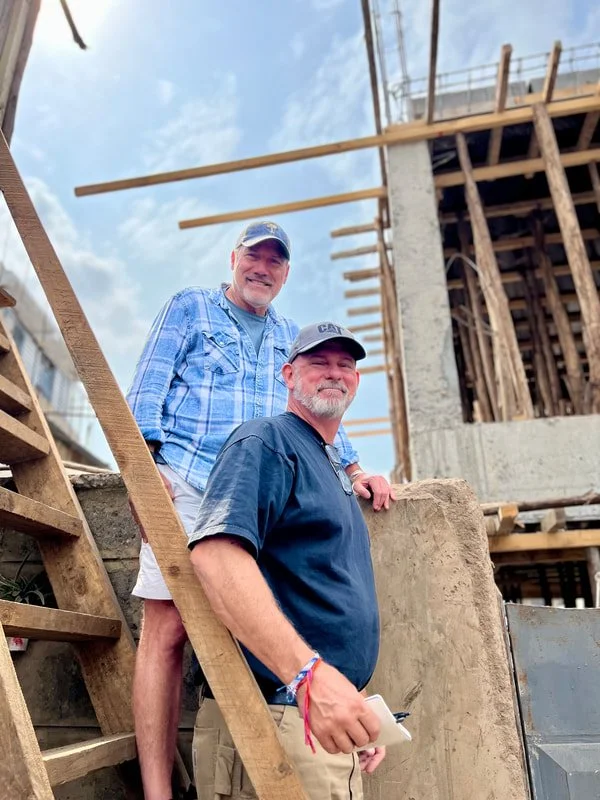
My name is Fritz Healy. I am a 62-year-old retired businessman from North Carolina.

Unlike Mike Harden, I am not a tough guy. I have had an incredibly blessed and joyous life. I pinch myself every day. I often say that I will wake up one day and say, "I had the most incredible dream." I am grateful every single day for the blessings that I have received.

That being said, it is a strong statement to say that my trip to Kibera with Crossing Thresholds was one of the greatest experiences of my entire life (a life filled with many great experiences).

It goes without saying that Kibera is, in many ways, a land of "have-nots." There is no government assistance, trash pick-up, running water, or reliable electricity. I was prepared for this, but it's still shocking to see.  

However, I was not prepared for the palpable joy and gratitude I saw on the faces (and in the hearts) of almost everyone there. I, too, teared up many times, not so much at the lack of things but at the positivity I witnessed.

We often ask ourselves, "What can I do?" Well, this is it. Time and money spent at my children's colleges only make a comfortable life more comfortable. Writing a check to some unnamed group feels good for about a day. This trip changed lives for the better - mine included. 

If you were to go onto Amazon, you could buy dozens of books on "gratitude." One could also invest time and money to make a "charity dinner" more successful. However, if you really want to make a contribution that changes lives- come on this trip!   

There are no words I can use to describe the joy on these kids' faces. It was magic to my heart and theirs. While I hope I am lucky enough to go every year, these memories will stay with me forever.  

I am particularly appreciative of the friendship(s) I made with my fellow travelers. In a world of "spoiled kids" I saw young people use their graduation money to come on this trip. If every young person in our country could see how blessed we are and the difference they can make, the world would surely be a better place.

I am beyond grateful for this experience. Not a day goes by without my thanking God for this gift. 

- Fritz Healy
Crossing Thresholds Trip Volunteer

Read More
Alyda Twilley Alyda Twilley

A Note on Kibera from Captain Mike’s Perspective

I had been to the Kibera Slum once before. I was ready for the smells. I was ready for the sites. I was ready to see the poor and the sick and hurting. I was not prepared for my reaction this time.

Those who know me will be surprised; those who have just met, or don’t know, me won’t be. 

I had been to the Kibera Slum once before. I was ready for the smells. I was ready for the sites. I was ready to see the poor and the sick and hurting. I was not prepared for my reaction this time.

Those who know me will be surprised; those who have just met, or don’t know, me won’t be. 

Fifteen years ago (or there about), I was an adventurer, a dare-taker, and a tough guy. I was single, drank, smoked, and cursed like the commercial fisherman I was. I played the part well (if I must say). Then, I got married and had a kid. So, things changed. I had my last pack of Marlboro Reds in December 2008. I put away the booze. And, then, I joined a program to help me become a better person.  

This last July, on the third day of my most recent trip to Kibera, while I was standing in front of about 35 dancing and laughing children, I cried. I'm not sure where it came from, but it hit me out of the blue. One minute I was fine, covered in dust and dirt and sweat.  Then out of nowhere, my sinuses filled up, and my eyes teared up. I even had a little trouble with my breath.

The innocence and joy of these children in contrast with the total lack of money, possessions or creature comforts was too much for my emotional grid. I thought of how much my daughter was given on a day to day basis. The delta between growing up with only the clothes on your back and the full-on, open, loud joy they demonstrated was simply staggering. How could they be so happy? And more importantly, why wasn’t I? 

Why don’t I see this kind of love and positive energy from the kids in my town? Why wasn’t I dancing and shouting with the same energy? Why did I deserve to witness this joy in such a difficult place to live and thrive? 

I came back to Kenya to help build another school—a school for these children who don’t have one. Crossing Thresholds is not the only NGO building schools in the Kibera Slum, but still thousands and thousands of kids are without a school where they can learn and grow. 

Some of you have heard the numbers - Kibera, the size of Central Park, about a million people, a third of the children under the age of 12, no public services, scant opportunity. True or not, the poverty is daunting AND I felt it. I felt myself inside of these kids who share this planet with me.  

These emotions are new for me. I am still learning how to deal with them. Talking about it helps. But doing something like carrying blocks, mixing cement, and building safe places for children to be children, that helps a lot!

Three times in one very short week, I cried. I am stronger for it and will use the energy and lessons to continue building. Heck, I’m almost crying just writing this. I still don’t drink, and I traded the cigarettes for a few good cigars now and again. I am slowly becoming proud of my emotions – turning them into positive energy to give these kids a chance at a better life. These great folks and their children have not heard the last of me.

With Peace,
Captain Mike Harden
​Crossing Thresholds Volunteer

Read More
Alyda Twilley Alyda Twilley

We Need Each Other

Virtual Steps into Kibera

I embarked on my emotional journey to Kibera, Kenya, in the midst of a pandemic, via zoom and emails.  Already my mind was brimming with anticipation of what working with Crossing Thresholds (CT) could mean for me and my family's life.  Eventually the opportunity arose and my son, Sean, and I jumped at the chance. Nothing could have prepared us for the transformative experience that awaited us.

Embracing Vibrancy

When I crossed the threshold into the Kibera Slum for the first time, I was immediately struck by the vibrant energy of the place. The narrow, winding streets buzzed with life. People walked everywhere; motorbikes wove through the busy alleyways; and street vendors sold shoes, fruit, meats, and almost anything else you might imagine. Inside one of CT’s schools, children played on a new playground while men built a new school behind them. The air was filled with the sounds of laughter, music and conversation. Despite the unimaginable challenges faced by the residents, there was a palpable sense of community and resilience. 

The Power of Gratitude

From the moment we arrived, it became clear that gratitude was a cornerstone of life in Kibera. The children and their teachers welcomed us with open arms and heartfelt smiles -- their hospitality a testament to their generous spirits. Despite having so little, they shared music, crafts, games and joy. It was humbling to witness their unwavering gratitude for the simplest of things—a warm meal, a place to sleep, a soccer ball, a kind word.

One of the most poignant moments of my trip was our final day when a soccer tournament had been set up between two Crossing Thresholds schools.  The US volunteers and school children sat together and made up the cheering section.  The collective joy unified us despite living worlds apart. While my mentee sat with her classmates cheering, I realized that I would need to keep this door of communication open after I returned home.  I somehow knew that we needed each other.  

Bridging Worlds

In Kibera, I learned that service is always a two-way street. While I came to give, I received so much more in return. My project on the ground was to paint a mural of the world with a bridge between Kibera and CT. The centerpiece of the mural is a bridge that arcs from Kibera to Crossing Thresholds, symbolizing unity, connection, and our shared destiny. 

Two of CT’s School Directors, Agnes and Isabel, taught me important lessons about resilience and hope. They showed me that even in the face of adversity, there is always room for gratitude and joy.  As I move forward, I carry with me treasured memories and lessons learned, forever grateful for those Kenyan women who taught me to see a BIGGER world.  


Jennifer Garvey
Crossing Thresholds Fundraiser Coordinator and Trip Participant

Read More
Alyda Twilley Alyda Twilley

Letters to Kibera

Bradlee Kraus and I met on my very first trip to Kenya in July of 2023. We became instant best friends; and I feel lucky to call her not only a second sister but a volunteer-partner within Crossing Thresholds!
 
After my second trip to Africa in January 2024, Bradlee and I began to brainstorm ways that we could further connect the students in Kibera with students in the United States. ​While Bradlee and I were on one of our frequent FaceTime calls, she shared with me her idea of forming a letter-writing campaign, which would connect the high schoolers from Ridgefield (CT) to the middle schoolers at Facing the Future School in Kibera.
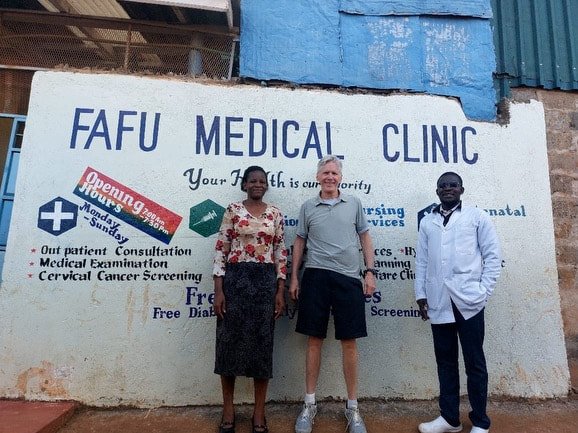
Bradlee Kraus and I met on my very first trip to Kenya in July of 2023. We became instant best friends; and I feel lucky to call her not only a second sister but a volunteer-partner within Crossing Thresholds!
 
After my second trip to Africa in January 2024, Bradlee and I began to brainstorm ways that we could further connect the students in Kibera with students in the United States. ​While Bradlee and I were on one of our frequent FaceTime calls, she shared with me her idea of forming a letter-writing campaign, which would connect the high schoolers from Ridgefield (CT) to the middle schoolers at Facing the Future School in Kibera.

We immediately jumped on the idea and began to plan out how we were going to accomplish this new and exciting initiative. Our goal was simple -- build connections which allow the students from Kibera to feel loved and cherished in the same way Bradlee and I feel connected.
 
As we set to work, there were a few obstacles that we had to overcome before we could begin to think about anything else. First and foremost, we needed to organize a group of students within Ridgefield High School who would write the letters. I am a member of the National Honors Society, so Bradlee and I decided utilizing that connection was the best way to organize our initiative. I pitched the idea to our NHS executive board, and they graciously endorsed the concept. After much planning and preparation (which included everything from spreading the word, figuring out times and locations, and materials needed), we scheduled a before-school meeting where anyone who wanted to write letters would be welcomed. On the morning of the meeting, I was quite nervous because I wasn’t sure how many (if anyone) would be interested in our project. However, thanks to the support of the NHS board, we had quite a large turnout, and ended the meeting with over 50 hand-written letters.

To say the least, the response went above and beyond our expectations, and I found myself assuring everyone involved that they would indeed be receiving a letter back from a child in Kibera. It was a very gratifying experience for both Bradlee and me, seeing the seed of an idea become reality.
 
I feel incredibly grateful for the blessings and opportunities that Crossing Thresholds has presented to me -- one of the most profound of which was giving me my best friend Bradlee. We hope that these letters will create lasting friendships, and that these bonds produce a deepening sense of hope in a world too divided. I want to give a special thanks to Mercy Otieno for her help and patience as we navigated some of the finer details of this campaign.  I also want to thank Carter Via and Rebecca Schneider for their encouragement and support. Last but certainly not least, a huge thank you to Bradlee for her enormous heart, and whose dedication to Kibera has inspired connections that will last a lifetime.

- Roma Peressutti
ELI Ambassador and Crossing Thresholds Volunteer

Read More
Alyda Twilley Alyda Twilley

Finding Connection Through Care

This past January was my first time in Kibera, my first time visiting Crossing Thresholds schools, and my first time doing Hypertension and Diabetes screening for the CT community. But it wasn’t my first time in Kenya.

This past January was my first time in Kibera, my first time visiting Crossing Thresholds schools, and my first time doing Hypertension and Diabetes screening for the CT community. But it wasn’t my first time in Kenya. 

In the thick of Covid, I found myself wanting to get out of my office space and craving a way to do charitable medical work. I looked into different countries where this might come to fruition. I chose Kenya, and went on my first trip in October (‘23) to work with another organization that matches medical volunteers with clinics in the Kenyan countryside. 

Shortly after, I was introduced to Carter Via and Dr. Tim Kenefick. After speaking to them, I was excited by the prospect of working with CT, where I knew I would have the opportunity to perform hypertension screening in an underserved community and to mentor Joel Ogumbe, a young and committed clinician who runs CT’s clinic at Facing the Future Primary School (FAFU). 

As an Internist based out of Connecticut, I was looking forward to bringing my expertise in Primary Care, which includes screening for and treating Hypertension and Diabetes, to Kibera to help make the community healthier. Especially in Kenya, the need for early detection and treatment of hypertension has become even more crucial, as unrecognized hypertension often leads to heart disease and strokes, resulting in a surge in deaths. 

During my time with Joel, we saw patients at the clinic, many of whom needed to be treated for hypertension. I was incredibly impressed with Joel’s dedication to patients and his drive to learn more. For every patient that walked in, Joel and the other clinic staff knew exactly who the patient was and what issues we would be trying to treat. 

Joel and I worked together to help him understand and work within the World Health Organization's (WHO) guidelines, develop future treatment plans, and establish strategies for patient care within the clinic. We reviewed the hypertension medicines available at FAFU and I recommended adding another class of medicine to expand the choices available to patients. Since then, Joel has been treating a patient for hypertension who has another condition which requires the use of one of these expanded choices, highlighting the need for additional medication options. 

Before I left, I encouraged Joel to reach out to me for assistance with more complex hypertension cases in the future. I’m happy to share that in the several weeks since then, we have collaborated to treat patients multiple times. I am incredibly happy with the work we were able to do there and I can’t wait to collaborate again with Joel next time I’m in Kibera.

The Covid pandemic was not easy for many reasons. Yet for me, it created the desire to go out into the world and do something positive. As a result, my world is forever changed.    


- Dr. Richard Huntley
Crossing Thresholds Volunteer

Read More
Alyda Twilley Alyda Twilley

Love and Work - Renovating Our Schools To Meet CBC Guidelines

​Sigmund Freud once said, “Love and work are the cornerstones of our humanness.” This certainly speaks to the heart and mission of Crossing Thresholds. In fact, our work is driven by our love for the children of Kibera. Our love is not merely sentiment. It is the deepest desire for the wellbeing of another. When one operates from that conviction, work is involved. We work to ensure the wellbeing of others. In 2024, our work at Crossing Thresholds will demand extra effort as we confront somewhat unanticipated challenges.

​Sigmund Freud once said, “Love and work are the cornerstones of our humanness.” This certainly speaks to the heart and mission of Crossing Thresholds. In fact, our work is driven by our love for the children of Kibera. Our love is not merely sentiment. It is the deepest desire for the wellbeing of another. When one operates from that conviction, work is involved. We work to ensure the wellbeing of others. In 2024, our work at Crossing Thresholds will demand extra effort as we confront somewhat unanticipated challenges.

Sigmund Freud once said, “Love and work are the cornerstones of our humanness.” This certainly speaks to the heart and mission of Crossing Thresholds. In fact, our work is driven by our love for the children of Kibera. Our love is not merely sentiment. It is the deepest desire for the wellbeing of another. When one operates from that conviction, work is involved. We work to ensure the wellbeing of others. In 2024, our work at Crossing Thresholds will demand extra effort as we confront somewhat unanticipated challenges.

Over the past 2-3 years, there has been a lot of confusion around education in Kenya. Some of the confusion began with the pandemic. But the biggest challenge has been the Kenyan government’s intention to overhaul the entire Educational System as we have known it. In a nutshell, the change is FROM a system marked by Primary Education (preschool through 8th grade) and Secondary Education (9th through 12th) TO Primary Education (preschool through 6th), Junior Secondary (7th through 9th) and Secondary Education (10th through 12th). Most Kenyan educators are enthusiastic about this change as it moves away from the old hierarchical British system. The new model is called the Competency Based Curriculum (CBC). The CBC was researched and developed by KICD (Kenya Institute of Curriculum Development). In summary, the new curriculum has pivoted away from an intensely old school, academic approach to teaching/learning. The new system is designed to be more practical, and to equip Kenyan students to be more competitive and employable in the global marketplace. Technology is an essential piece of the new model. Thanks largely to Ken Kaplan, we are prepared on that front!

For Crossing Thresholds and our five partner schools, the additional demands of the CBC are quite significant. At each of our schools, we will need to build 9th grade classrooms; at each of our schools, we will need to build Science Labs; at each of our schools, we will need provide space for more extracurricular programming; and at each of our schools, we will need more toilets for the extra students. These are merely the capital improvements. At the same time, we will need to hire several more teachers with more teaching credentials.

As with anything in life, extra work can be stressful. All these demands carry a price tag. But here is the competing truth. These challenges are exciting. Something new is happening in Kenya. The new curriculum will provide more opportunities for the children in Kibera. As Sigmund Freud once said, work is one of the cornerstones of our humanness. When the work makes it possible for underserved children to break the chains of poverty, it is noble work. For us, it is born of love.


- Carter Via
Founder and Executive Director

Read More
Alyda Twilley Alyda Twilley

We can offer hope!

It was a beautiful day in Kibera, the sky was blue, it was 80+ degrees and dry. January weather in Nairobi is delightful, at least compared to New England. I turned the corner into FAFU School and, at first, was disoriented; it had changed so much since I had last seen it. New buildings and a playground! Among other changes, FAFU had just completed construction on a new clinic where I was to work the next few days. I am a pediatrician, and have been for (oh my god) - a few decades and on my CT trips I usually do a free medical clinic. CT provides some free medications and support for any staff working with me. Medications are surprisingly inexpensive in Kenya compared to the US and we can offer free care and treatment to dozens of local residents. Simeon, the Director at FAFU, usually puts the word out to the neighborhood that we will be there.

It was a beautiful day in Kibera, the sky was blue, it was 80+ degrees and dry. January weather in Nairobi is delightful, at least compared to New England. I turned the corner into FAFU School and, at first, was disoriented; it had changed so much since I had last seen it. New buildings and a playground! Among other changes, FAFU had just completed construction on a new clinic where I was to work the next few days. I am a pediatrician, and have been for (oh my god) - a few decades and on my CT trips I usually do a free medical clinic. CT provides some free medications and support for any staff working with me. Medications are surprisingly inexpensive in Kenya compared to the US and we can offer free care and treatment to dozens of local residents. Simeon, the Director at FAFU, usually puts the word out to the neighborhood that we will be there.

Last time I worked in a small side office with one small window and no power. The new clinic was quite a change. It was freshly painted, there were new and functioning bathrooms (!), a waiting and reception area, a triage room, a medication room, a lab and 3 exam rooms…quite an expansion from my previous experience. It was a bit disorganized as the paint was still drying. As I walked in, I passed about 20 Kenyans sitting on benches, some of whom had already been waiting hours to see the “European” doctor in the free clinic. Even more were waiting outside. Kenya has national health insurance that costs about $3.25/month (500KS), but even that is beyond what most Kiberans can afford. Some of the neighborhood residents waited hours or even days to see me for the prospect of free care. 
 
FAFU had hired a clinician, Joel Ogumbe, to work in the clinic but it had not yet officially opened. Clinicians in Kenya are equivalent to nurse practitioners or Physicians Assistants in the US. They provide most of the primary care, especially for holders of the national health insurance which covers the vast majority of Kenyans, though most Kiberans are uninsured. The hope for the clinic is that it could attract enough paying/insured patients to keep it going and provide free care to students in the CT schools. Joel and I assembled the staff, a receptionist, and an RN to triage patients. Accompanying us on the trip with CT was Alan, a Dentist and Endodontist who would also see patients. 
 
We got to work. Though I am a pediatrician, I saw patients from under a year to almost 80 years of age. In Kibera we see things routinely one almost never sees in the US. Early on the first day, Alan came to me with a question about a pretty sick boy he was seeing. He had three seriously abscessed teeth. His teeth were so infected the entire side of his face was swollen and red. The infected teeth had huge cavities and were not savable. He told us his teeth had been infected for weeks and getting worse. He was in significant pain and struggled to eat. These infections can be quite dangerous at this stage; the infection can spread into the sinuses, the bloodstream, or the brain. He needed urgent treatment. Alan said the teeth had to be pulled and the infection treated, as it was unlikely that without extraction antibiotics would be effective. I agreed, this boy was very sick. I asked Alan if he could pull the teeth safely here. He felt he could easily do it, he had the necessary equipment (Novocain and dental pliers) with him. 
 
I told him, “We help who we can with what we have while we are here”.

Alan pulled the three abscessed teeth out of that young man quickly and easily... and, as it turned out, a whole lot more teeth in other patients who were truly suffering. The next day one of the boy’s friends brought a handwritten note from the boy on a piece of discarded paper. A thank you note! He thanked Alan for treating him, he felt so much better. He had been in pain for weeks - it was not that his parents did not love him or care - they simply did not have enough money to get him care. He was so grateful to feel better. 
 
We help who we can with what we have while we are there.
 
The second day I saw a 39 year old woman who complained of a lump in her left breast. She had seen another doctor who had suggested she get an ultrasound but she could not afford it. When I examined her, she had a large suspicious mass in her left breast and a large firm lymph node in the adjacent armpit.  I was pretty sure she has breast cancer. I have experienced this moment a few times in my career; in an instant you see something, or feel something or get a result that will forever change a person’s life…or potentially end it. There is a “before” and now there is an “after”; the person’s life will never be the same. 

I asked Joel how hard it was to get an ultrasound. Not hard, he replied, as he knew a local radiologist he could call who could do it. The woman said she had no money and no way to get to the radiologist.  I asked Joel how much his colleague would charge for the test. He replied an ultrasound in Kenya would cost $25 and if we got a motorbike driver to take her there it would be another $10. I opened my wallet and we arranged the test. $35 to give this woman a chance at life. In an hour I had a nicely typed ultrasound report revealing a large left breast mass strongly suggestive of cancer and a likely metastatic lymph node in her axilla.

I talked to her and explained the results. She told me she had three young children dependent on her. I urged her to take the report to one of the large hospitals and seek care and that if she did not, and soon, this disease could kill her. I urged her to do it for her children. She took the report and left. 
 
In the US medical field, we talk about healthcare disparities. There are tremendous differences in the exposure and incidence of disease as well as access to and quality of care between differing populations of people with different incomes, races, locales. In medicine, we try to address or at least be aware of these disparities when providing care. Kibera, however, is one giant disparity. Disparities of so many things including the one between hope and reality. In the US, FEMA and other agencies estimate the value of a human life at $7.5 million. Economists calculate this number by asking people how much they would spend to reduce their chance of death by 1/100,000 in the next 12 months. Kibera has done that math for us, the value of a life is something less than $35.
 
We help who we can with what we have while we are there. If nothing else, we can offer hope. 
 
At the end of the day, Joel somewhat sheepishly mentioned he had started a GoFundMe for his education. He had grown up in Kibera and a child had watched his mother die of bacterial meningitis because there was no money for doctors or medicine. It is hard for me to imagine what Joel, as a little boy, had gone through. He grew up orphaned and managed to get himself through school and become a clinician. He is committed to working for the people of Kibera, especially the children (he has 2 of his own and another on the way soon!). He wanted to do 2 more years of graduate medical education in Pediatrics to better serve the many kids in Kibera and the CT schools. There are so many kids in Kibera and he wanted to serve not only his community, but the CT schools as well. Education in Kenya is not expensive by US standards but it was way out of his reach financially. 

That evening I emailed my partners in my practice at the Stamford Health Medical Group Pediatric Center (as we polysyllabically call ourselves) and we all agreed to cover the cost. I could do a little good in the few days I was there seeing patients, but Joel will be there a lifetime. It was a ‘teach a man to fish’ moment and as I write, Joel is about halfway through his pediatric program.
 
We help who we can with what we have while we are there. In the US, doctors have money, another disparity.
 
On my last day I saw an older woman in her 70s, who came in with a variety of complaints. She had high blood pressure but couldn’t afford medication. Her blood pressure was about 190/130, an obligatory ER visit in the US but routine in Kibera. Sadly, I saw lots of patients that week with similar pressures, untreated due to access and cost…a disparity. In my mind I started to do the mental math regarding the increased risk of stroke, heart attack and kidney failure from all the untreated hypertension, a huge burden of chronic disease barely addressed in the daily struggle to survive in Kibera. 

“I can give you some medicine for your blood pressure for free,” I told her, but explained that she must keep taking it. Joel told her of some places she could buy them for a very reasonable cost.
 
She also had a lot of pain in her knees and ankles.  I told her I would take a look and came around my desk and knelt on the floor in front of her. I examined her legs, removed her sandals, well-coated with red African soil and checked her feet for sores or ulcers. As I was doing so I looked up at her and noticed that she had a slightly surprised look on her face. I surmised that in her life, no doctor had ever gotten down on the floor to check her legs and feet. As I examined her I asked her if she had done a lot of heavy work in her life. She sighed and nodded saying she had done laundry most of her life to earn money. Lots of heavy lifting and carrying…not to mention the children she raised. I told her I thought it was not serious but that she had arthritis. I told her that she must have worked very hard and her life of hard labor had taken its toll. She nodded knowingly. I told her I was sorry for her pain, I could not cure it but I could give her free medicine to help control it along with her blood pressure.
 
Joel went to our little pharmacy stocked by CT with meds and she began to gather her things. She held her bag in her lap and looked me straight in the eyes and asked, kindly but with a hint of incredulity: “Why are you doing this?”
I was stunned for a second. There was no judgment in her voice, only curiosity. She had unknowingly asked the central question of my professional life, my life as a citizen of earth and the question at the core of CT’s mission. The only answer that came to my tongue was, “Why to help people like you.” She smiled and nodded, gathered her things and left…with some medicine.
 
I could not cure her pain, but I could help control her blood pressure, at least for a while. 

We help who we can with what we have while we are there. If nothing else we can give kindness and compassion and be prepared to receive it in return.
 
The morning of my last day in Kenya, my cell phone rang at 6 am. It was my wife Maureen. She had been traveling the week before I left for Kenya. I had not seen her for two weeks, the longest time we had ever been apart in our 20 years of marriage. She had been well when I last saw her and generally she was very fit and active, walking 4-5 miles a day with our poodle, Daisy. She had fallen a couple of times in the last two weeks under strange circumstances, but felt fine otherwise except for some unusual fatigue. Her doctor ordered some tests including an MRI of her brain and Maureen had just gotten the results.

She had an inoperable brain tumor. We experienced no disparity in care. We had access to the best cancer hospitals and saw the best brain cancer experts in the world. As a physician and a nurse we had spent a lifetime navigating healthcare; we knew who to call and how to get through. It did not matter, there was precious little to be done. She showed almost unbelievable courage and acceptance in her illness but, in four months, she was gone.
 
We help who we can with what we have while they are there. Often, we must accept that nothing can be done.
 
As I write this, I have just returned from 2 weeks in Kenya. Once again to help a few people, including Joel, as he builds a following for the clinic and serves the kids of CT schools. Once again, I face the overwhelming disparity that is Kibera, where so much help is needed and so little is available. Sometimes it feels like the help we muster and the effort we expend is just a tiny island in a great sea of inequity. It is a place that brings the serenity prayer to glaring reality. Once again, I go to confront the tension between agency and acceptance that the experience continues to teach me.
 
We help who we can with what we have while we are there. And by doing so we help ourselves. 


- Tim Kenefick
Crossing Thresholds Board Treasurer

Read More